Enter Password

Players felt they could “win” by playing it safe. I introduced a system that reintroduces risk, excitement, and FOMO.
Research showed players were cashing out early, believing they could consistently win by avoiding greed.
While this didn’t negatively impact the system itself, it reduced emotional intensity and made gameplay feel predictable over time.
I introduced the Surge, a dynamic mid round event that temporarily removes control while rapidly increasing the multiplier.
This creates high tension moments and visible missed opportunities, encouraging players to stay in longer and experience the full excitement of the game.



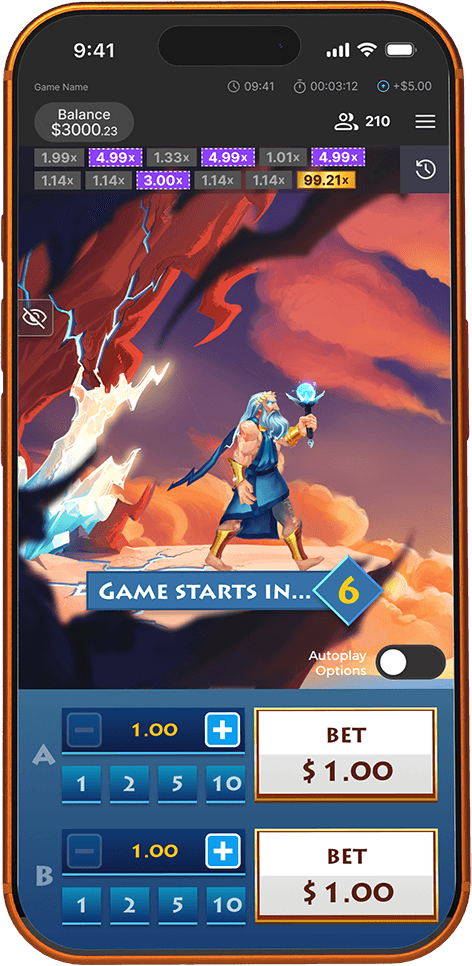




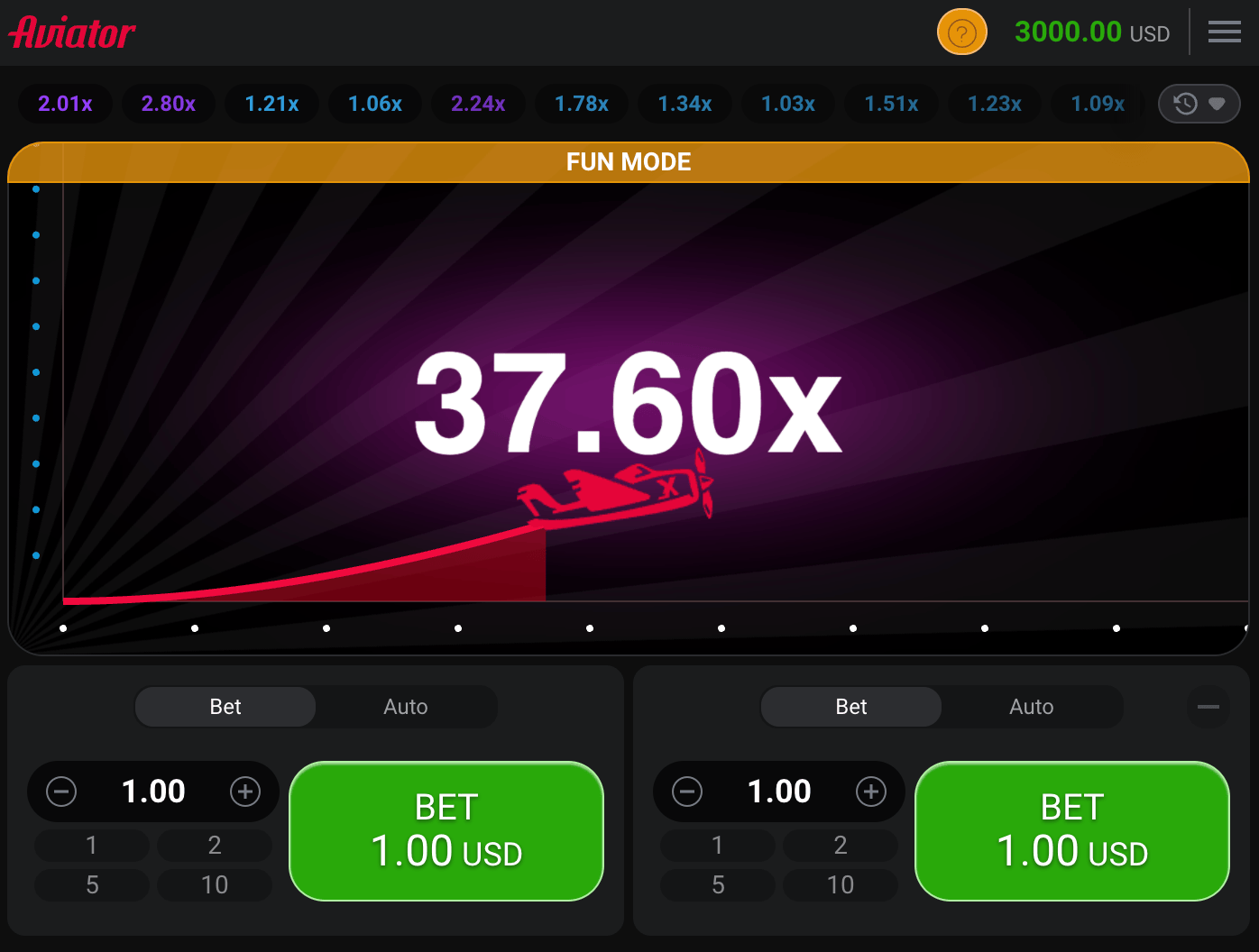
Traditional crash games rely on a simple loop: place a bet, watch the multiplier increase, and cash out before it crashes.
Over time, players learn to cash out early, believing they can consistently win by avoiding risk.
While this creates a sense of control, it reduces tension and limits emotional engagement.
The challenge was to introduce a new mechanic that increases tension and engagement, without breaking familiarity or adding complexity.
The surge mechanic was designed to create anticipation and commitment, encouraging players to stay in beyond their usual exit point.
During a surge:
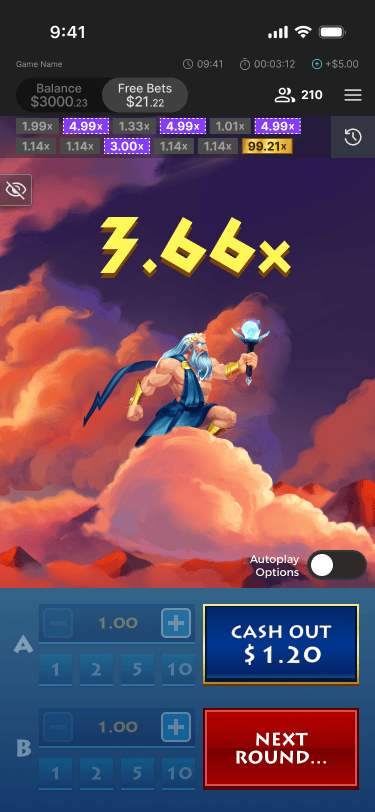
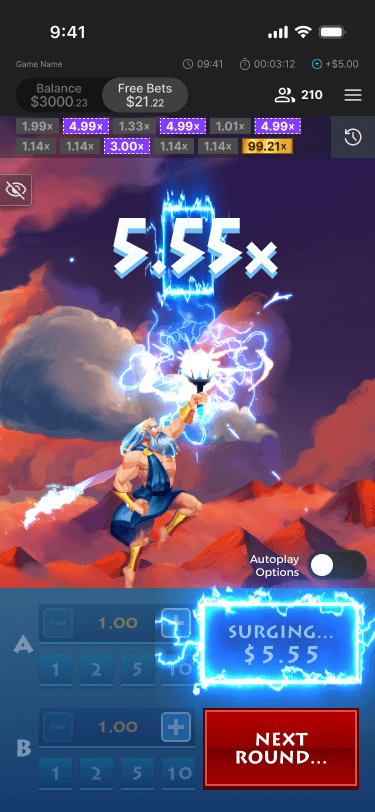
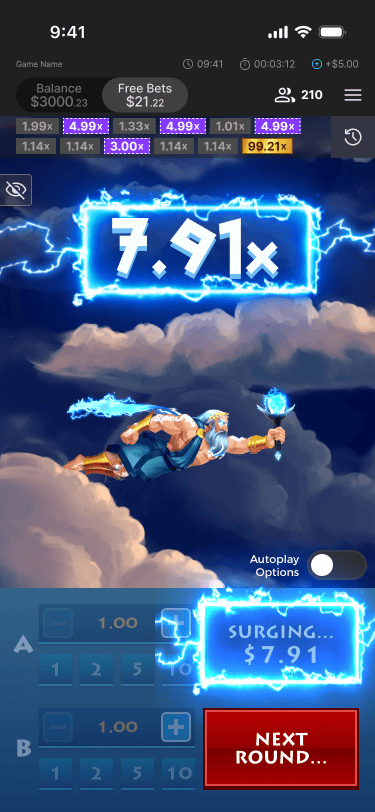
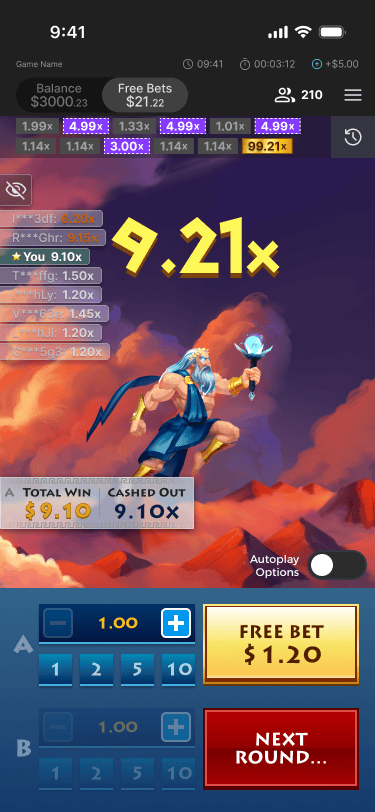
• Cash out is temporarily disabled
• The multiplier accelerates rapidly
• Risk and reward escalate together
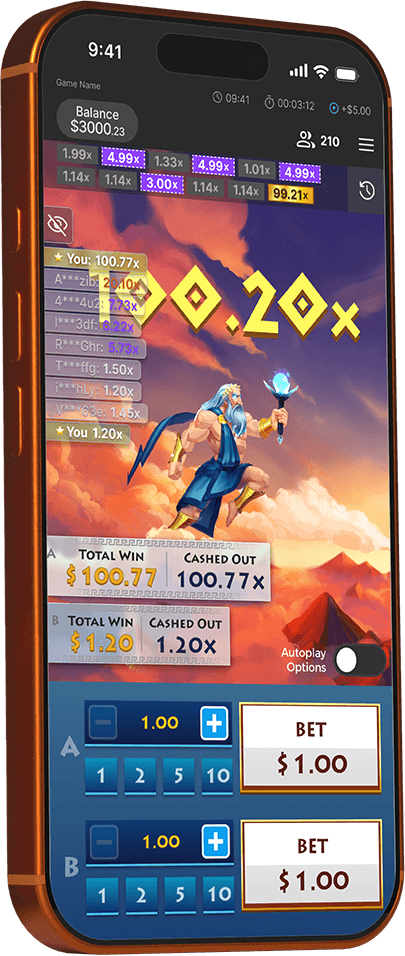
All players can see the surge, including those who have already cashed out. This reinforces a sense of missed opportunity and potentially influences behaviour in future rounds.
Once the surge ends, control returns with a short countdown, creating urgency and decision pressure.
This shifts the experience from purely reactive to emotionally driven, while keeping the core gameplay simple.
During the surge
The surge acts as a mid-round event that changes the pacing of the game.
It can trigger dynamically during gameplay, temporarily removing player control while accelerating the multiplier.
This required careful balance:
• Clear communication that cash out is disabled
• Strong visual feedback during the surge
• Reassurance that control will return
The mechanic was designed to feel intentional and exciting, not confusing or unfair.
D
Dan White
7 min. ago
CashOut button disabled during the surge event
I worked closely with product and development to define how the surge integrates into the core gameplay loop.
The interaction needed to remain simple and predictable, even as the mechanic introduced moments of tension.
The flow was designed as:
Player places a bet
Game begins
Surge may trigger dynamically
Cash out is temporarily disabled
Surge ends
A short countdown returns control
Player chooses to cash out or continue
This allowed the mechanic to introduce meaningful tension without increasing cognitive load or disrupting familiar gameplay patterns.




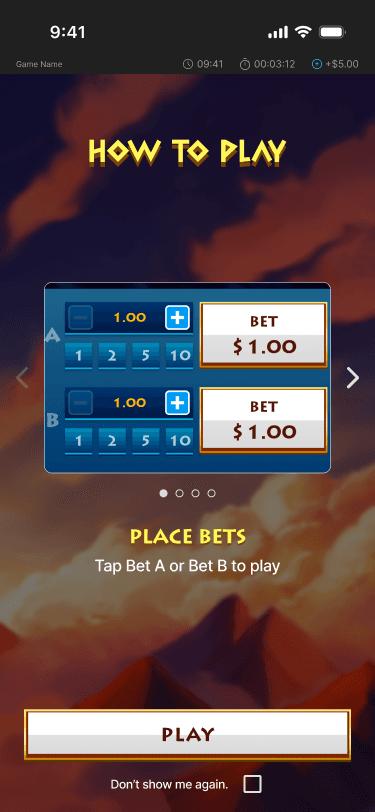
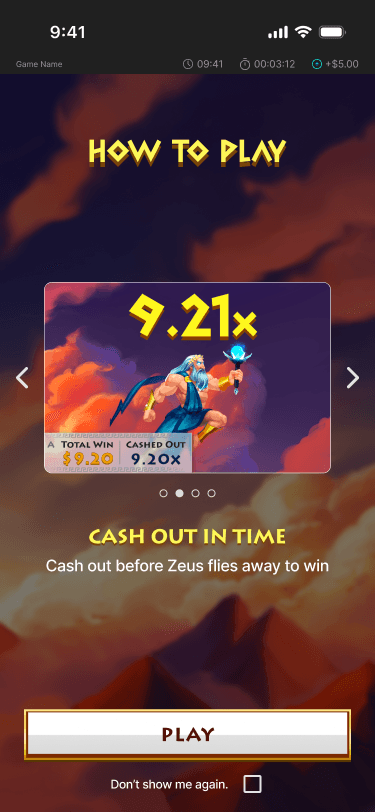
I designed the first reusable “How to play” system to support onboarding across all games.
The previous approach was limited to a small number of steps, which restricted how clearly more complex mechanics could be explained.
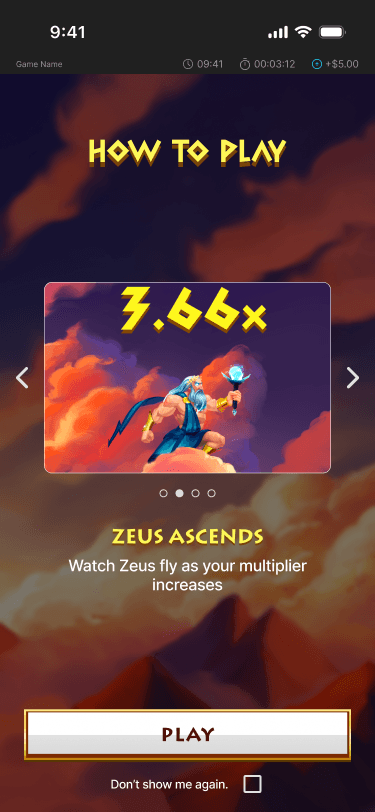
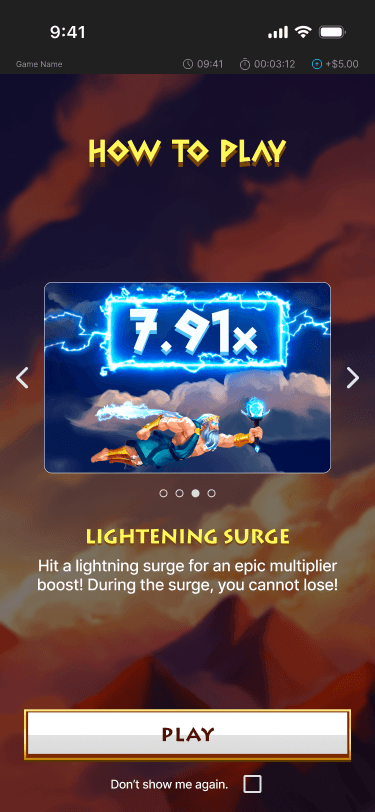
I introduced a carousel-based system that allows for greater flexibility, including:
• Additional steps without layout constraints
• Larger visual examples
• The ability to incorporate animation where needed
This made it easier to communicate gameplay clearly while supporting more complex mechanics such as the surge.
I worked closely with product and development to ensure the system could be reused across future titles, improving both consistency and speed of delivery.
This established a scalable onboarding pattern that could be applied across the product portfolio.
This was the first project where I worked alongside a dedicated artist (Sam), allowing the visual quality of the game to be pushed further.
In previous titles, I had been responsible for the visual design, creating strong and functional experiences. This collaboration allowed us to build on that foundation and take the visuals to a higher level of polish and expression.
Compared to earlier work:
• Environments became more dynamic
• Character animation was more refined
• Effects and lighting added a stronger sense of energy
The Zeus theme enabled a more dramatic and high-impact visual style, supporting the intensity of the surge mechanic.
This marked a shift towards a more expressive, experience-driven visual approach.
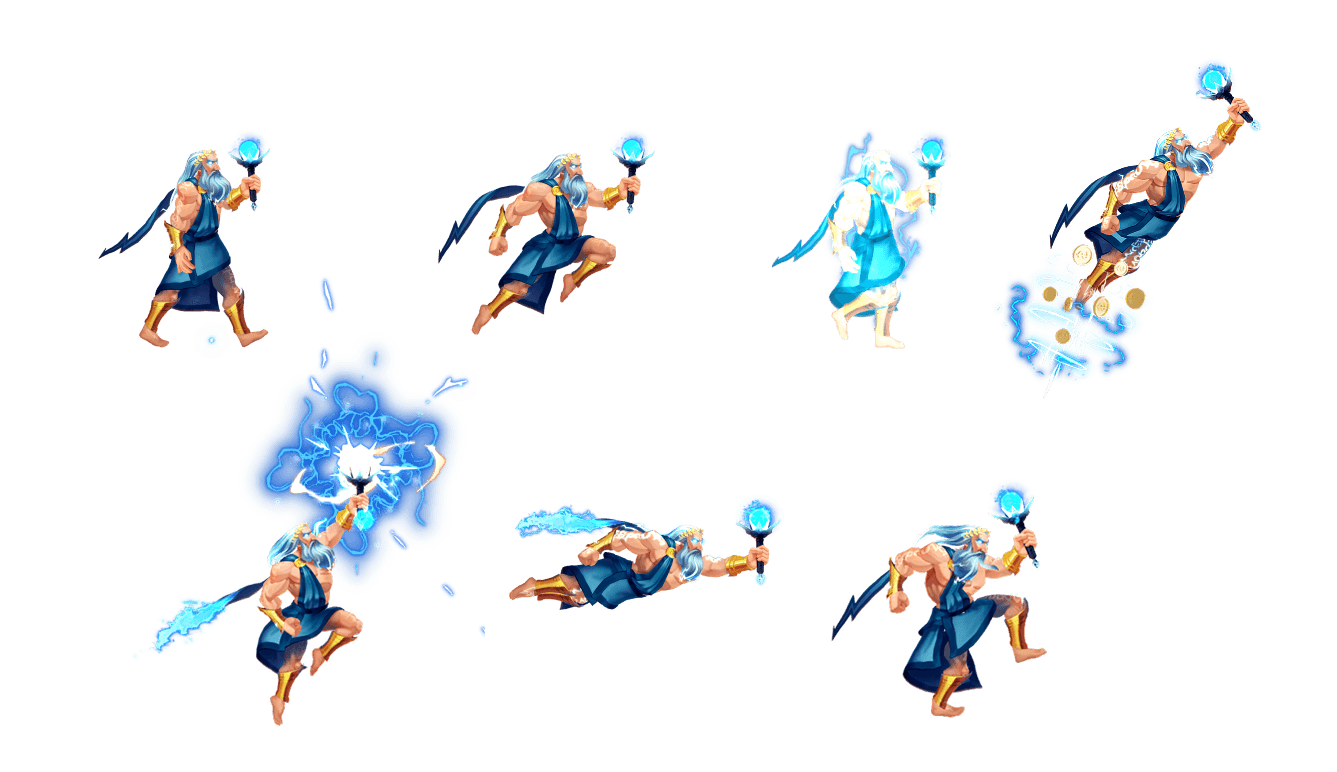
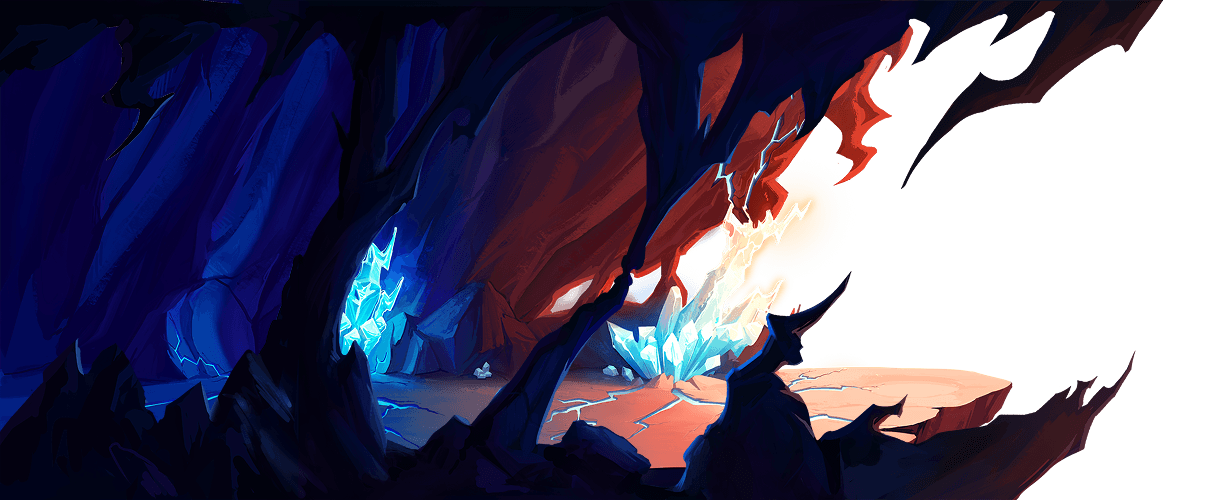
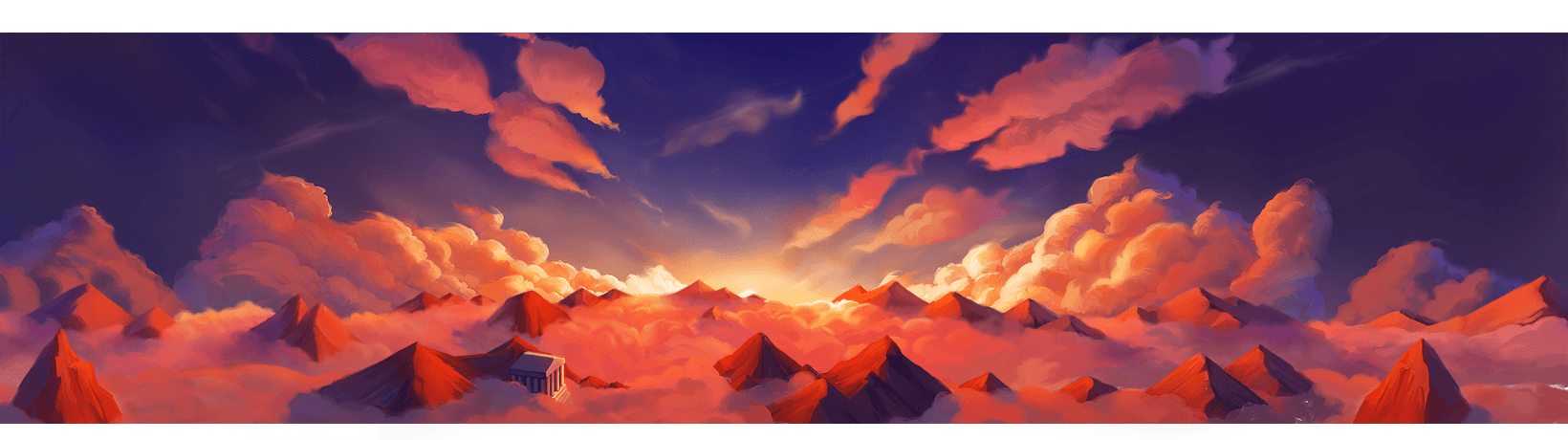

The experience was designed with a subtle narrative inspired by Zeus and Greek mythology.
Each round begins with the Zeus character walking out of a cave as the countdown timer goes down to start the game.
The game starts Zeus jumps and the multiplier increases, the environment evolves, transitioning towards a palace in the sky inspired by Mount Olympus.
Reaching higher multipliers reflects a sense of ascension. At random points, Zeus can be struck by lightening, and then this is when the surge happens and he glows blue, and hurtles ahead.
This layer introduces a sense of progression and purpose, shifting the experience from simply reacting to the multiplier to building towards something greater.
The surge mechanic introduced a new way to increase engagement within crash gameplay.
It demonstrated how temporarily restricting control at key moments can heighten tension and create more memorable experiences.
Key learnings:
• Limiting control can increase emotional impact
• Timing and pacing are critical to engagement
• New mechanics must feel intuitive within seconds
The result is a more dynamic crash experience that builds on familiar gameplay while introducing meaningful variation.