
During the growth of online Home Games, players were using separate video-call platforms to recreate the social side of playing poker with friends. I worked within the PokerStars design team on bringing video directly into the table experience, contributing to product discussions and problem solving while taking primary responsibility for the visual and UI execution.
Problem
Online poker connected the game, but not the people around the table.
Ownership
UI & visual design, with contribution to interaction and product discussions
Collaboration
Worked within a multidisciplinary PokerStars product and design team
Applied to
Video chat integrated into PokerStars Home Games
PROBLEM
During the pandemic, PokerStars Home Games saw significant growth as friends looked for ways to continue playing together remotely.
But playing the cards was only part of the experience.
A traditional poker night is social. Players talk, react, joke and read one another around the table. Online Home Games handled the poker itself, but players were increasingly using platforms such as Zoom alongside the game to recreate that human connection.
That behaviour highlighted an opportunity.
The product problem
How could we bring face-to-face interaction directly into an online poker table without compromising the clarity of the game itself?


OPPORTUNITY
Bring the missing social layer into the product itself.
Rather than asking players to manage PokerStars and a separate video call, the team explored integrating webcams and microphones directly into Home Games.
This would allow players to see and speak to each other while continuing to play, bringing some of the behaviour and atmosphere of a physical poker night into the digital experience.
It also introduced an important design constraint.
Poker tables already contain a large amount of information: cards, chips, bets, player names, balances, actions and game states.
Adding live video meant finding room for an entirely new type of content without making the table harder to understand.
Connect
Let friends see and speak to each other without leaving the game.
Preserve
Keep the existing poker information and gameplay easy to follow.
Scale
Create an approach capable of supporting different table sizes and use cases.
DESIGN CHALLENGE
Video changed one of the most important elements on the table: the player pod.
The existing player pods were designed around relatively compact information such as the player's avatar, name, chip stack and current state.
Introducing live video fundamentally changed the amount of space each player required.
As a team, we explored how the player pods needed to change so webcam feeds could become part of the table while the information players relied on during a hand remained visible.
My role was primarily on the UI and visual-design side. I helped to translate those decisions into the final interface and visual assets, while contributing to the discussions around layout, hierarchy and how the new feature should behave alongside the existing poker experience.
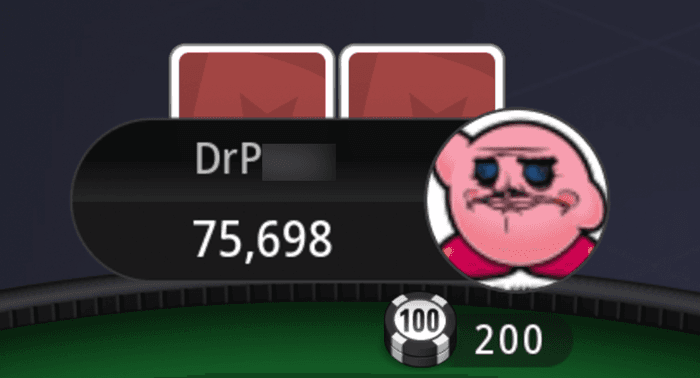
Normal player pod
The UI had to balance two competing needs
Make people more visible
The purpose of the feature was social connection, so video needed enough prominence for expressions and reactions to actually be useful.
Keep the poker readable
Player information, bets and game states still needed to remain immediately understandable during live gameplay.
DESIGNING THE PLAYER PODS
The player pod became the key UI problem.
Instead of treating webcam video as a separate layer floating above the product, we incorporated it into the existing table structure so each person remained visually connected to their position and their poker information.
This meant considering the relationship between:
Live video
Player name
Chip stack
Bet information
Player state
Microphone and camera controls
Table position
Different numbers of players
The final visual system needed to make the video feel native to PokerStars rather than something bolted onto the existing product.

Video player pod
MY CONTRIBUTION
Contributing within a larger product design team.
This wasn't a project where I owned the entire UX process.
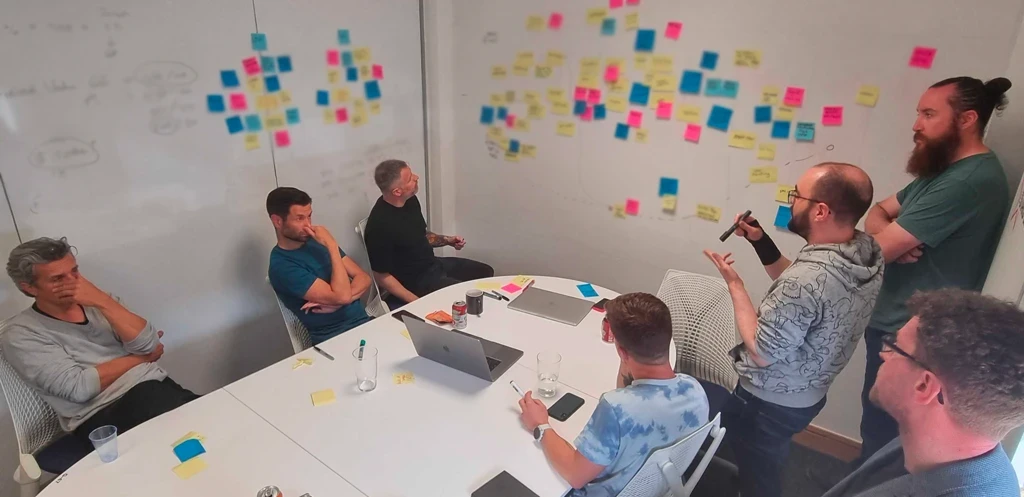
I worked as part of the wider PokerStars design team, contributing to discussions, design reviews and problem solving while focusing primarily on UI and visual execution.
My contribution included:
Translating the agreed experience into detailed, production-ready interface designs.
Helping evolve one of the core table components to accommodate live video.
Balancing webcam footage with the information players needed to make decisions during a hand.
Contributing to discussions around interaction, layout and different Home Games use cases.
Creating and refining the visual elements required for the finished experience.
That distinction is important to me. It was collaborative product work, with my strongest ownership sitting in the interface and visual layer rather than claiming ownership of research or the complete product strategy.
OUTCOME
Video became part of the PokerStars Home Games experience.
The finished feature integrated video chat directly into Home Games and supported both Cash Games and Tournaments.
Instead of playing poker in one application while talking to friends in another, players could see reactions, talk and interact around the same digital table.
PokerStars positioned the feature around bringing elements of the live poker experience online, including the conversation, reactions and even physical tells that are usually lost when people play remotely.
For streamers and community organisers, Home Games could also become a place for larger groups and audiences to play together.
REFLECTION
What I would do differently now.
Looking back, I would put more structure around validating the behaviour we had observed before moving too far into the solution.
Seeing players combine PokerStars with platforms such as Zoom was a strong signal, but it did not necessarily mean they wanted those experiences brought together in one product. Today, I would quantify that behaviour, speak to different types of Home Games players and test the concept earlier before investing heavily in the final experience.
I would also separate the needs of small private groups from larger creator-led communities much earlier. Both used Home Games, but their motivations, social dynamics and expectations were very different.
The video and voice feature was eventually discontinued by PokerStars. That makes the biggest lesson from the project even clearer: identifying a real user behaviour is not the same as proving there is long-term demand for a new feature.
If I approached the project today, I would place much more emphasis on adoption, repeat usage and whether an integrated experience provided enough value to change an existing habit.
Supporting evidence
PokerStars reported more than 300,000 new Home Games being created during a three-month period in 2020 as demand increased and player feedback drove improvements to the product.
PokerStars later introduced integrated video chat for Home Games, allowing webcam and microphone communication during both Cash Games and Tournaments.
DESIGNING FOR SOCIAL POKER
The result was more than putting webcams on a poker table.
Video chat allowed players to see and speak to their friends directly while playing.
Players could create webcam-enabled Cash Games or Tournaments from their Home Games club, removing the need to coordinate a separate video call alongside PokerStars.
For me, the project was an example of visual design solving a product problem rather than simply changing how a product looked.
The player pod redesign had to accommodate a new behaviour, preserve existing information and fit within one of the most information-dense areas of the PokerStars interface.